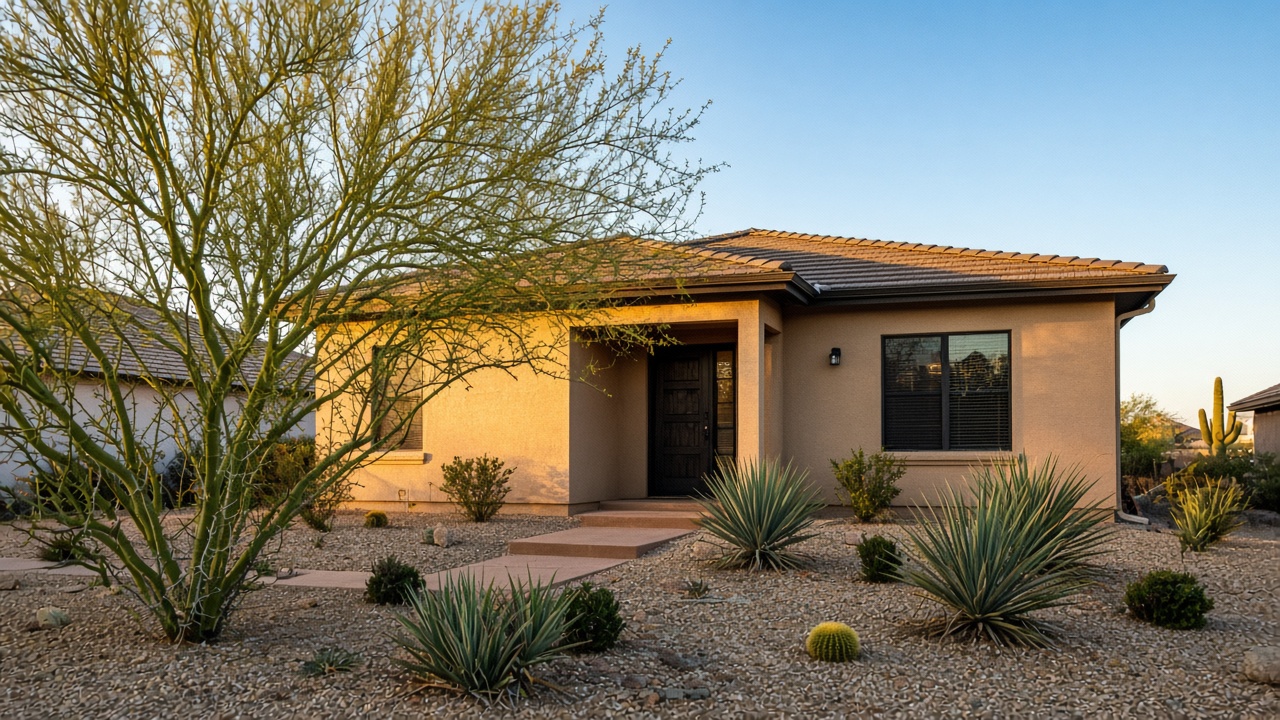
How Much Income Do You Need to Buy a $300,000 or $400,000 Home in the Phoenix Metro?
One of the first questions I hear from buyers in the Phoenix metro and East Valley is simple: how much income do I need to buy a $300,000 or $400,000 home? It is a fair question. The honest answer is that income matters, but it is never the only number that decides whether a home is a fit.
I have been helping Arizona buyers and homeowners since 1991, and I would rather walk you through how lenders actually look at this than hand you a single salary figure that sounds neat and turns out to be wrong. This article is educational. I am not quoting today's rates or a monthly payment, because those change with pricing, credit, the property, and the loan program.
Income is only one piece of the picture
When I review a file, I look at the whole picture, not just your annual salary. Lenders typically consider:
- Your stable, documented income and how long you have earned it
- Monthly debts already on your credit report, such as auto loans, student loans, and credit cards
- The full cost of owning the home: principal and interest, plus property taxes, homeowners insurance, and any association dues
- Your credit profile and the funds you can bring to closing
- Reserves — cash left over after closing — which can help on some loan types
Two households with the same income can get very different results. A buyer with a car payment, student loans, and a high credit-card balance has less room for a housing cost than a buyer with the same paycheck and almost no other debts. That is why a salary-only rule of thumb is so often misleading.
The 28/36 guideline, and why it is not a hard rule
You may have heard of the 28/36 guideline. In plain terms, some people budget so that the total housing cost is around 28 percent of gross monthly income, and all monthly debts together stay around 36 percent. Those figures are a starting point, not a law, and they are not a quote for any loan.
Here is a labeled hypothetical, only to show the math. If a household earns $7,000 a month before taxes, which is $84,000 a year, 28 percent of that income is $1,960. That $1,960 is not a mortgage payment I am offering or estimating. It is simply 28 percent of $7,000, and it would have to cover the entire housing cost — principal, interest, taxes, insurance, and any association dues — not interest alone. Many loan programs can approve a higher share of income when the rest of the file is strong. Some first-time buyer programs have their own limits. The only way to know where you stand is to use your actual income, debts, and a specific property.
What a $300,000 or $400,000 home means in the East Valley
In the Phoenix metro, those two prices can feel like different markets depending on the city. Mesa and other East Valley communities are often among the more attainable pockets for buyers who want space and newer inventory. Scottsdale and parts of north Phoenix often price higher for the same bedroom count. I am not quoting a current median sale price. The same purchase price can come with very different tax, insurance, and association bills from one neighborhood to the next. Condos and townhomes can open a door at a lower price, but dues and any special assessments have to be part of the budget.
Loan limits also matter once prices climb. For 2026, the Federal Housing Administration (FHA) limit in Maricopa County is $557,750 for a one-unit home. The conforming limit for conventional loans is $832,750 in every Arizona county. A $300,000 or $400,000 purchase sits comfortably under those caps, so the loan limit itself is rarely the issue at these prices. Qualification — income, debts, credit, and the property — is usually what decides it.
Can you buy a $300,000 home on a $50,000 or $70,000 salary?
This is one of the most-searched versions of the question, so I want to answer it directly. A $50,000 salary is about $4,167 a month before taxes. A $70,000 salary is about $5,833 a month before taxes. Whether either one can support a $300,000 home in the East Valley depends on your other debts, the funds you can put down or receive through an assistance program, your credit, and the tax and insurance bill on the specific house. It is possible for some buyers and not possible for others. I will not tell you yes or no from a salary alone.
A $400,000 home generally means a larger loan and a larger tax bill than a $300,000 home, so the income and debt picture has to be stronger. That does not automatically put a $400,000 home out of reach, and it does not automatically make a $300,000 home easy. The property and the rest of your file do the talking.
Other things that change the income you need
A larger down payment reduces the amount you borrow, which can lower the income needed to qualify. Arizona also has down payment and closing-cost programs, including Arizona Home Plus statewide and Home in Five Advantage for homes in Maricopa County. Those programs have income limits, education requirements, and other rules, and they must be used through a participating lender. I do not treat them as automatic, and I will help you check what is actually open.
Loan type matters too. Conventional, FHA, VA, and USDA loans each have their own approach to credit, down payment, and debts. A Veterans Affairs (VA) loan, for eligible veterans, surviving spouses, and service members, can be a strong option because it may not require a down payment. None of that replaces a full review of your file. In Maricopa County, property taxes and insurance are a real part of the monthly housing cost, and in some communities association dues are too. Two homes with the same price can qualify very differently once those items are included.
A better way to get your number
Online calculators can be a starting point, but they often assume a rate, a tax amount, and a debt level that are not yours. The useful next step is a conversation and, when you are ready, a pre-approval based on your documents. A first call does not require you to apply, and talking with me does not touch your credit.
Frequently asked questions
Is there a single income number that qualifies me for a $300,000 home?
No. Lenders look at income alongside debts, credit, funds to close, and the tax, insurance, and dues on the property. Two buyers with the same salary can get different results.
Is the 28/36 rule a requirement?
No. It is a common budgeting guideline, not a universal cap. Many loan programs can approve higher ratios when the rest of the file is strong. Some programs set their own limits.
Do I need to be pre-approved before I shop in the East Valley?
It is the wiser order. Sellers take pre-approved buyers more seriously, and you will negotiate with a clearer sense of a comfortable budget instead of guessing.
Let's look at your numbers
If you are trying to decide between a $300,000 and a $400,000 home in the Phoenix metro or East Valley, I am happy to walk through it with you. Book a call and we will use your income, your debts, and a realistic local cost picture — not a one-size-fits-all salary chart.
Book a call with Brian Cardenas
Written by Brian Cardenas, Branch Manager, NMLS 183143, serving the Phoenix metro and East Valley, Arizona.
Educational content only, not a commitment to lend. Rates, programs and guidelines change. Brian Cardenas, NMLS #183143 | UMortgage+ powered by NEXA Lending, NMLS 1660690 | Equal Housing Lender.
